


Introduction to the Taj Mahal
The Taj Mahal, an exquisite mausoleum located in Agra, India, stands as a testament to the rich cultural heritage and architectural prowess of the Mughal era. Commissioned by Emperor Shah Jahan in memory of his beloved wife, Mumtaz Mahal, this iconic structure is often regarded as a symbol of eternal love. Recognized as a UNESCO World Heritage Site, the Taj Mahal attracts millions of visitors each year, who are captivated by its beauty and grandeur.
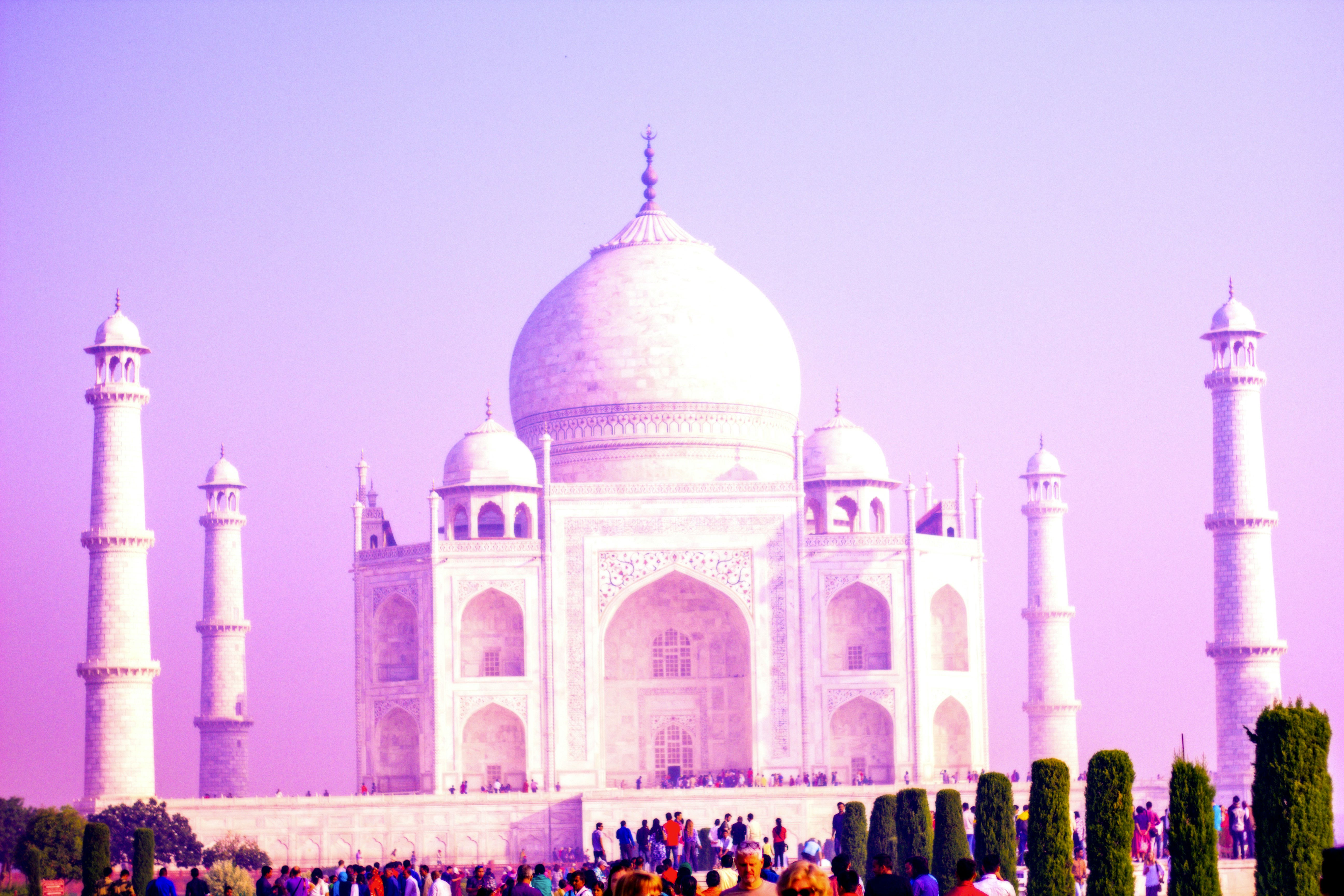
Constructed between 1632 and 1648, the Taj Mahal showcases the brilliance of Mughal architecture, which harmoniously blends elements from Persian, Islamic, and Indian styles. Characterized by its symmetrical gardens, reflective pools, and intricate carvings, the structure is primarily composed of white marble that reflects various hues throughout the day, creating an ethereal aura. This fusion of architectural styles and materials not only signifies the emperor’s devotion to his wife but also stands as a remarkable achievement in the world of architecture.
The importance of the Taj Mahal extends beyond its aesthetic appeal. It serves as a significant cultural emblem for India and represents the country’s rich history and traditions. The monument also embodies the philosophical ideals of love, loss, and beauty, resonating deeply with visitors from various walks of life. Furthermore, the Taj Mahal’s recognition as a UNESCO World Heritage Site underscores its global significance, urging the need for preservation and protection against the threats posed by pollution and urbanization. Thus, the story of the Taj Mahal is not merely about a structure; it encapsulates a narrative of love, art, and the enduring legacy of a bygone era.
The Vision and Inspiration Behind the Taj Mahal
The Taj M

ahal stands as an enduring emblem of love, capturing the hearts of visitors with its breathtaking beauty and intricate craftsmanship. This magnificent mausoleum was born from the profound love story between Mughal Emperor Shah Jahan and his beloved wife, Mumtaz Mahal. Their romance was woven into the fabric of the Mughal dynasty, underpinned by their shared aspirations and deep affection for one another.
The inspiration behind the Taj Mahal is deeply rooted in personal tragedy. Mumtaz Mahal, known for her beauty and grace, sadly passed away during childbirth in 1631, leaving Shah Jahan heartbroken. This immense loss was pivotal, compelling him to construct a monument that would not merely serve as a tomb but also as a testament to their undying love. In his grief, Shah Jahan envisioned a structure that would transcend time and space, embodying the essence of their relationship. The design of the Taj Mahal reflects an idealized notion of paradise, marrying both Persian and Indian architectural styles, which showcases the grandeur of the Mughal era.
<pfurthermore, a=”” adorn=”” all=”” and=”” as=”” banks=”” beauty,=”” bond.=”” changing=”” cherished=”” choice=”” color=”” construction;=”” designed=”” devotion=”” devotion,=”” engraved=”” enhance=”” eternal=”” everlasting=”” evoke=”” feelings=”” forms.=”” from=”” further=”” go=”” honor=”” in=”” intentionally=”” it=”” its=”” lengths=”” light—symbolizes=”” loss,=”” love=”” love,=”” mahal’s=”” marble—a=”” material=”” may=”” mere=”” narrative=”” nature=”” of=”” on=”” one=”” p=”” placement=”” purity=”” quran=”” reinforcing=”” relationship.
Construction: The Architectural Marvel
The construction of the Taj Mahal stands as an unparalleled testament to architectural ingenuity and devotion. Commissioned by Mughal Emperor Shah Jahan in memory of his beloved wife, Mumtaz Mahal, the building process spanned from 1632 to 1653, engaging a vast and skilled workforce. Historical records suggest that around 20,000 artisans, laborers, and craftsmen contributed to the creation of this iconic structure, each bringing diverse skills and expertise from various regions to the project.
The selection of materials played a significant role in the Taj Mahal’s construction. It is primarily built from white marble, sourced from Makrana in Rajasthan. This marble was chosen not only for its beauty but also for its ability to reflect different shades throughout the day, creating an ethereal visual harmony. Additionally, other materials such as red sandstone, precious gems, and intricate inlay work using semi-precious stones were employed, showcasing the opulence associated with Mughal architecture.
The architectural style of the Taj Mahal exhibits a harmonious blend of Persian, Islamic, and Indian influences. This fusion is evident in its prominent features, such as the grand dome, which symbolizes the heavens, and the use of symmetry, which reflects the concept of balance and order in nature. The layout of the Taj Mahal is based on a meticulously organized garden, known as a charbagh, signifying paradise. Each element of the complex, from the minarets to the reflecting pools, showcases the significance of symmetry, drawing the eye toward the mausoleum and enhancing the overall aesthetic experience.
By integrating these architectural styles and design principles, the Taj Mahal transcends mere functionality to become an enduring symbol of love and artistic expression. Its construction not only demonstrates the skills of its builders but also leaves a legacy that continues to inspire awe in visitors from around the globe.
Historical Events Surrounding the Taj Mahal’s Construction

The construction of the Taj Mahal, a monumental symbol of love and architectural brilliance, took place during a significant and complex era in Indian history known as the Mughal Empire. This period spanned from the early 16th century to the 19th century and was marked by profound political, economic, and social transformations. The Mughal Empire, particularly during the reign of Emperor Shah Jahan (1628-1658), experienced substantial territorial expansion and cultural flourishing, creating a conducive environment for monumental architecture, such as the Taj Mahal.
Shah Jahan ascended to the throne following a turbulent struggle involving succession wars that shaped the political landscape of the empire. His reign was characterized by relative stability which allowed for the consolidation of power and wealth. However, beneath this seeming tranquility, there were instances of unrest and rebellion, including the Deccan campaigns. The resources allocated towards military endeavors influenced the socio-economic fabric of the empire and directed attention towards grandeur in architecture as a means of asserting royal authority and cultural prestige.
The era was also marked by flourishing trade routes that contributed to the empire’s wealth. This prosperity not only facilitated the importation of rare materials, such as lapis lazuli, but also allowed artisans and craftsmen to thrive, fostering a skilled labor force that would produce the intricate designs seen in the Taj Mahal. Furthermore, the Mughal architecture of the period was influenced by diverse cultural exchanges, including Persian, Indian, and Islamic styles, which are evident in the amalgamation of artistic elements within the monument.
In essence, the socio-political dynamics of the Mughal Empire during Shah Jahan’s reign significantly shaped the foundation and essence of the Taj Mahal. The aspirational motive behind its construction, coupled with the historical events of the time, creates a rich tapestry illustrating not only the emperor’s affection for his beloved wife, Mumtaz Mahal, but also the cultural opulence of the Mughal Empire.
Symbol of Love or Symbol of Opulence?
The Taj Mahal is often celebrated as an enduring symbol of love, primarily because it was commissioned by Emperor Shah Jahan in memory of his wife, Mumtaz Mahal. This poignant narrative evokes deep emotional connections, as the monument is perceived as a testament to everlasting love. However, viewing the Taj Mahal solely through this romantic lens may overlook its broader socio-economic and political contexts.
Constructed in the 17th century, the Taj Mahal also serves as a manifestation of the immense wealth and power that characterized the Mughal Empire at its zenith. The meticulous craftsmanship and extravagant materials used, such as the finest white marble and precious gemstones, reflect not just a personal loss but also a display of opulence. This sheer grandeur signifies the imperial authority and economic prowess that Shah Jahan wielded during his reign.
Additionally, the scale of the Taj Mahal’s construction demands consideration of the socio-political landscape of the time. The employing of thousands of skilled artisans and laborers facilitated by the empire’s vast resources illustrates that the shrine was not merely a private endeavor but also a collective display of Mughal architectural ambition. As a result, the Taj Mahal can be interpreted as an embodiment of power, prestige, and the technical advancement of its era.
Ultimately, the dual interpretation of the Taj Mahal as both a symbol of love and opulence invites a more nuanced understanding of its significance. It embodies the complexities of human emotion intertwined with the grandeur of imperial authority. This multifaceted layer of meaning enriches its historical narrative and solidifies its status as one of the world’s most iconic monuments. As perspective varies, so does the understanding of this magnificent structure, allowing it to resonate with audiences on multiple levels.
The Taj Mahal in Literature and Art
The Taj Mahal, an emblem of love and architectural brilliance, has significantly influenced the realms of literature and art throughout history. This majestic monument, constructed by Mughal Emperor Shah Jahan in memory of his beloved wife, Mumtaz Mahal, has served as a muse for countless writers and artists who have sought to capture its beauty and emotional resonance. Its intricate design and the poignant story behind its creation have been immortalized in various forms of artistic expression.
In literature, the Taj Mahal has found a place in numerous poems and novels. Writers like Rabindranath Tagore have described it as a “teardrop on the cheek of time,” illuminating its ethereal quality and the deep love narrative it encompasses. Other poets and authors have often drawn parallels between the monument’s grandeur and universal themes of love, loss, and remembrance, thereby weaving the Taj Mahal into the fabric of their narratives. Such literary works not only highlight the monument’s significance but also underscore its emotional impact on human experiences across cultures and eras.
The artistic interpretations of the Taj Mahal are equally diverse and profound. Painters and photographers have sought to encapsulate its stunning beauty, using various mediums to convey the striking interplay of light, symmetry, and reflection that characterizes the structure. Artists from different cultural backgrounds have created their renditions, showcasing the monument’s influence on global art. The imagery of the Taj Mahal has transcended geographical boundaries, becoming a symbol of exquisite craftsmanship and romantic idealism, inspiring everything from classical paintings to modern photography.
Ultimately, the Taj Mahal’s presence in literature and art speaks to its enduring legacy and the universal emotions it evokes. It continues to captivate the minds of artists and writers, reflecting humanity’s timeless pursuit of beauty and love.
Preservation Efforts and Challenges
The Taj Mahal, a UNESCO World Heritage Site and a symbol of India’s rich cultural heritage, has faced significant challenges in its preservation since its completion in the 17th century. Over the years, the majestic marble mausoleum has been subjected to various environmental and anthropogenic pressures that threaten its structural integrity and aesthetic appeal. One of the primary factors contributing to the deterioration of the Taj Mahal is air pollution, particularly from industrial emissions and vehicular exhaust surrounding the Agra region. The particulate matter in the atmosphere has led to the yellowing of the marble, necessitating continuous cleaning and restoration efforts.
The Indian government, along with several non-governmental organizations, has initiated multiple measures aimed at mitigating these challenges. Strategies such as the introduction of eco-friendly fuels and the regulation of industries near the monument have been central to efforts for reducing pollution levels. Additionally, the implementation of the Taj Protection Mission, established by the Supreme Court of India, focuses on monitoring pollution and setting strict guidelines for construction activity in the vicinity. Environmental restoration efforts have also included afforestation projects to enhance air quality and the establishment of a buffer zone around the monument.
Another significant challenge in preserving the Taj Mahal is the impact of climate change. Fluctuating weather patterns and increased rainfall can lead to the erosion of the delicate marble façade, presenting yet another hurdle for conservationists. Restoration projects are constantly evolving, utilizing modern technology to track conditions and identify vulnerabilities. The intricate carvings and inlay work that adorn the monument require specialized skills for authentic restoration, emphasizing the importance of preserving traditional crafts alongside the monument itself. As efforts continue, the balancing of tourism, preservation, and environmental sustainability remains a critical concern for maintaining the grandeur of this iconic structure for future generations.
The Taj Mahal Today: A Global Icon
The Taj Mahal, an architectural masterpiece located in Agra, India, remains one of the most recognized monuments in the world and continues to draw millions of visitors each year. As a popular tourist destination, it attracts approximately 7 to 8 million visitors annually, contributing significantly to the local and national economy. This iconic structure, originally commissioned in the 17th century by Mughal Emperor Shah Jahan, is not only a testament to love but also a pivotal driver of tourism in India.
Visitor experiences at the Taj Mahal often reflect a deep appreciation for its historical and cultural significance. Tourists frequently express awe at the intricate craftsmanship seen in its white marble facade, adorned with semi-precious stones. Many share anecdotes of their emotional connection to the site, recounting moments of reflection while gazing at the monument’s ethereal beauty. This sense of wonder contributes to its reputation as a must-see destination, often featured in travel guides and documentaries, and bolstering its status as a global icon.
The Taj Mahal’s allure also extends beyond its visual impact; it plays a vital role in India’s economy. The revenues generated from tourism related to the Taj Mahal support local businesses, from hotels and restaurants to artisan shops and tour services. Moreover, it fosters employment opportunities, thereby contributing to economic upliftment in Agra and surrounding regions. As the monument faces challenges such as environmental degradation and overcrowding, measures are being undertaken to preserve its integrity while ensuring that visitors can continue to experience its majesty.
Furthermore, the Taj Mahal evokes a sense of national pride among Indians. It symbolizes the country’s rich history and cultural heritage, encapsulating the spirit of a bygone era while standing resilient against the test of time. Its continued prominence as a global icon reflects both its historical significance and the enduring legacy of the love story it represents.
Conclusion: The Legacy of the Taj Mahal
The Taj Mahal stands as a monument not only to the artistic achievements of the Mughal Empire but also to the enduring power of love and devotion. Commissioned by Emperor Shah Jahan in memory of his beloved wife, Mumtaz Mahal, this magnificent structure encapsulates intricate artistry and architectural brilliance, making it one of the most admired works in the world. Its historical significance extends beyond its role as a tomb; it is a symbol of an era marked by cultural amalgamation and innovation.
Over the centuries, the Taj Mahal has transcended its original purpose, evolving into an iconic representation of love that resonates across cultures. Visitors from around the globe are drawn to its beauty and the poignant story behind its creation, fostering a deep emotional connection that transforms the site into a pilgrimage for lovers and romantics alike. This eternal connection to love enhances the Taj Mahal’s status, allowing it to remain relevant long after the era of its conception has passed.
Furthermore, the Taj Mahal embodies a blend of various architectural styles, including Persian, Islamic, and Indian influences. This fusion not only showcases the artistic prowess of its creators but also reflects the rich cultural heritage of India. As a UNESCO World Heritage site, the monument has been recognized for its outstanding universal value, ensuring that it continues to be a source of inspiration and admiration for generations to come.
In sum, the legacy of the Taj Mahal is multifaceted, intertwining historical, cultural, and emotional facets into a singular narrative. It serves as a reminder of the lengths to which individuals will go to honor their loved ones. As such, the Taj Mahal endures as a symbol of artistic excellence, a testament to love, and a cherished part of global heritage.

ye Jankari कैसी लगी जरूर comment करे 🙏🏏❤️